
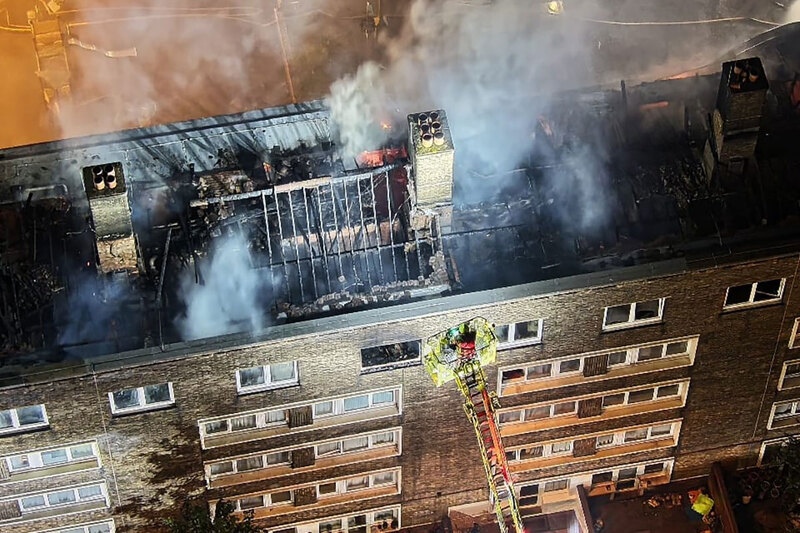
Roof voids are increasingly being identified as a critical factor in the rapid spread of fire within buildings/properties, particularly where the risk assessments are inadequate or compartmentation is poorly maintained.
A recent fire risk assessment presented to the FirePro team showcased a significant issue within the client’s building, concluding that should a fire occur, there is a high risk of rapid fire spread due to the substandard roof voids. Roof voids allow heat, smoke, and flames to travel across a structure at a fast pace, as these concealed spaces often lack effective fire-stopping measures and subsequently act as unseen pathways, enabling fire to bypass internal compartmentation and spread extensively before detection or intervention.
This risk is heightened when roof voids are not included at all within fire risk assessments or are difficult to access for inspection. In such cases, where the compartments go unidentified, the likelihood of rapid fire spread and complicating suppression and extinguishing of the flames, increases.
The risk becoming more prominent has prompted the discussion of how the challenge can be addressed. Fire safety personnel, building owners and risk management teams are being introduced to new mitigating measures including the installation of temporary fire suppression systems, whilst long-term remediation has not yet been identified or factored.
Condensed aerosol systems, such as FirePro, are one such mitigating measure, designed to suppress and contain a fire at an early stage within concealed voids. While not a substitute for permanent remedial works, fire suppression systems play an important role in reducing risk while longer-term solutions are configured and implemented.
The increasing identification of structure compartments highlights the importance of ensuring roof voids are properly assessed, adequately compartmented, and included within ongoing fire safety strategies to prevent them from becoming hidden passages for fire spread.